Cryptocurrency in 2030: What to Expect
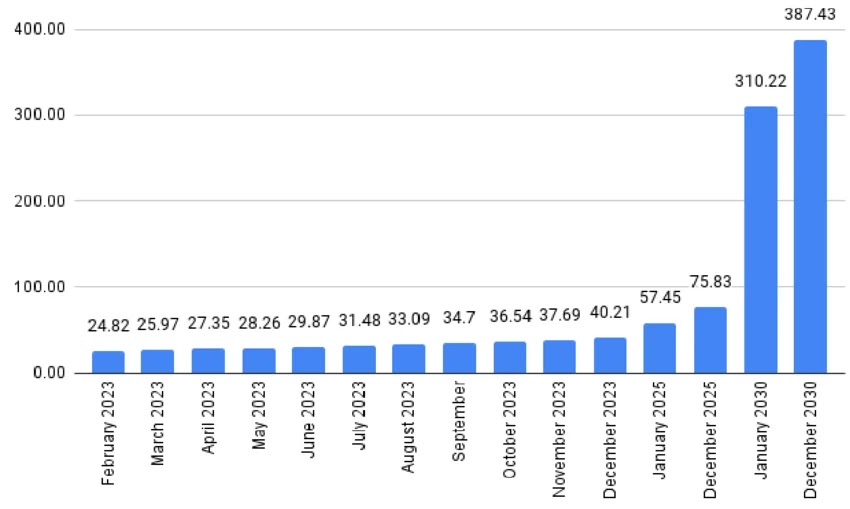
As we approach the end of this decade, cryptocurrencies are no longer just a technological experiment or a speculative asset. They are becoming an increasingly important part of the global financial system.
By 2030, we are expected to witness a profound transformation in how money is used, invested, and even managed at the economic level. So, what can we expect?
1. Wider Global Adoption
By 2030, cryptocurrencies are likely to become far more widely used by individuals and businesses. We may see:



- Major companies accepting digital currency payments in everyday transactions
- Integration of cryptocurrencies into traditional financial applications
- Increased usage in countries with unstable financial systems
The shift from “digital currency investors” to “everyday users” will be one of the most significant changes.
2. Clearer Government Regulations
The current regulatory uncertainty will not last forever. Governments are expected to move toward:
- Clear legal frameworks to protect investors
- Defined taxation policies on digital currency profits
- Regulated trading platforms
This may reduce risks but could also limit some of the freedom that defines the digital currency space.
3. Rise of Central Bank Digital Currencies (CBDCs)
Many countries are already developing their own digital currencies. By 2030:
- Government-backed digital currencies may become common
- They will likely integrate with traditional banking systems
- They will compete with decentralized cryptocurrencies in daily use
However, they will differ in being fully controlled by governments.
4. Major Advances in Blockchain Technology
The underlying distributed ledger technology will likely see significant improvements, such as:
- Faster digital currency digital currency cryptocurrency crypto transaction speeds
- Lower fees
- Better scalability solutions
Blockchain may also expand into industries like healthcare, education, and supply chain management.
5. decentralized finance Becomes More Mature
Decentralized Finance (decentralized finance) is expected to evolve from an experimental system into a real alternative to traditional banking:
- Loans without intermediaries
- Yield generation from digital assets
- More advanced financial tools
However, increased regulation will likely accompany its growth.
6. Integration of AI and Cryptocurrency
Artificial intelligence will reshape the digital currency space:
- Smarter trading bots
- Advanced market data analysis
- Stronger cyber cyber security systems against hacking
This combination may improve efficiency but also increase competition.
7. Changing Concept of Digital Ownership
With the growth of Web3 and digital collectibles:
- Digital asset ownership will become more common
- People may own virtual land and digital businesses
- New digital economies will emerge in virtual worlds
8. Greater Market Stability
Although price price volatility will not disappear completely:
- Institutional adoption
- Increased liquidity
- Regulation
may lead to more stable markets compared to early years.
9. Ongoing Challenges
Even by 2030, some challenges will remain:
- Privacy concerns
- Security risks
- Tension between decentralization and regulation
- Environmental impact of certain networks





The security tips in this article are very important for protecting crypto assets.
This guide helped me understand how to use stop loss correctly.